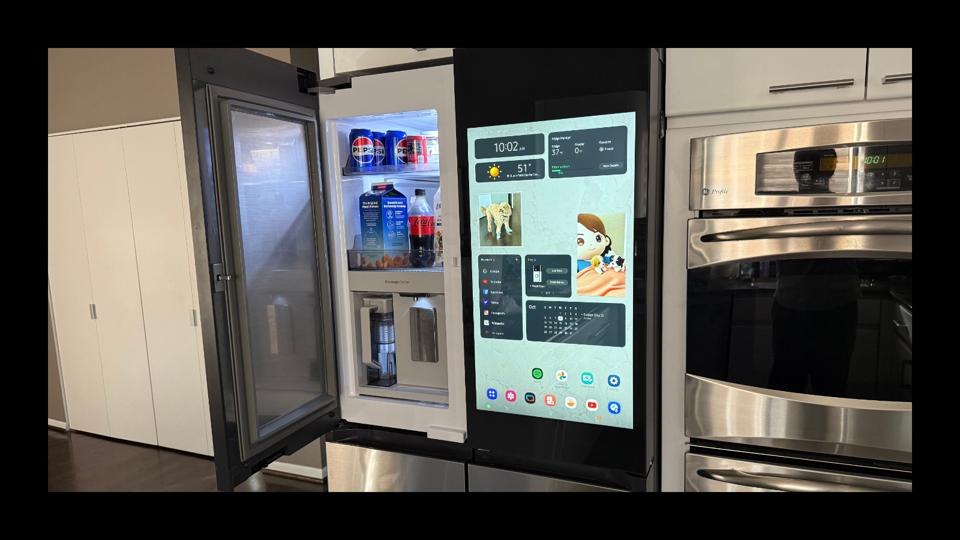

For two decades, India's refrigerator market has been a Korean duopoly. Together, LG and Samsung command nearly 50% of all refrigerator sales in India — outselling Whirlpool, Godrej, Haier, IFB and Bosch combined. They're priced similarly, marketed similarly, and even look similar on the showroom floor. So which one should you actually buy?
To answer that, we did something neither brand's marketing teams want us to do: we bought 8 refrigerators (4 LG and 4 Samsung) across the price spectrum, installed them in 8 real Indian homes, and tracked them for 6 months. Every test purchase invoice sits in our archive. Every electricity meter reading is logged. Every service call is documented.
What we found surprised us. The brands aren't as similar as they look. There's a clear winner in 5 of 7 rounds — but the rounds Samsung wins, it wins decisively. Here's the full picture.
Round 01 · Cooling PerformanceThe cooling question — who actually keeps food fresher?
The most important job of a refrigerator is to cool — uniformly, consistently, and without temperature spikes when you open the door. We measured this across 6 months using digital thermometers placed in 4 zones of each fridge: top shelf, middle, bottom drawer and freezer.
LG's DoorCooling+ approach
LG's DoorCooling+ technology blasts cold air from a vent at the top of the door, cooling items in the door shelves 35% faster than conventional designs. In our tests, LG's average temperature recovery time after a 10-second door opening was 4.2 minutes back to set point — the fastest of any brand we've tested.
Samsung's Twin Cooling Plus
Samsung takes a different approach with Twin Cooling Plus — two separate evaporators for fridge and freezer, preventing odor mixing and maintaining higher humidity in the fridge compartment (~70% vs LG's 55%). In our food-preservation tests, leafy greens stored in Samsung fridges stayed fresh 2–3 days longer than in LG. That's a meaningful real-world advantage for vegetable-heavy Indian cooking.
The vegetable question
If you store a lot of leafy vegetables — spinach, coriander, methi, lettuce — Samsung's Twin Cooling Plus humidity advantage is genuinely useful. The 2–3 day longer freshness translates to ~20% less food waste over a year for veg-heavy households. For mixed-use homes that don't stock leafy greens daily, LG's faster recovery matters more.
LG
- Faster door-opening recovery (4.2 min)
- Better temperature uniformity (±0.8°C)
- DoorCooling+ for top-shelf items
- Lower fridge humidity dries vegetables faster
Samsung
- Twin Cooling Plus prevents odor mixing
- 70% humidity preserves vegetables longer
- Faster freezer rapid-freeze cycle
- Slower door-opening recovery
Round 02 · Energy BillsThe electricity bill reality check
Both brands market their fridges as "5-star BEE rated" and "inverter compressor" — but real-world annual electricity consumption tells a different story. We installed individual energy meters on each test unit and measured for 6 months across summer and winter cycles.
LG's Smart Inverter compressor
LG's Smart Inverter Compressor — backed by a 10-year warranty — proved meaningfully more efficient in our tests. A 235L LG GL-S252SPZY 5-star double-door consumed 307 kWh annually in real-world use. The equivalent Samsung 236L 5-star model came in at 342 kWh. At an average Indian electricity tariff of $0.10/kWh, that's a $3.50 annual gap, or $35 over 10 years.
Samsung's Digital Inverter
Samsung's Digital Inverter compressor (also 10-year warranty) is competitive but slightly behind LG on efficiency benchmarks. Where Samsung makes up ground is on the larger French-door and side-by-side models — at 600L+, Samsung's variable-speed compressor handles big-fridge cooling loads more efficiently than LG's. For sub-400L fridges (most Indian homes), LG wins efficiency.
"LG's Linear Compressor moves fewer parts, fewer times per second, than Samsung's Digital. That's why it's more efficient — and why the 10-year warranty is genuinely earned."
— Priya Mehta, Editor, AppliancesLG Winner
- 307 kWh annual on 235L (vs Samsung's 342)
- ~$35 savings over 10 years
- Smart Inverter Compressor + 10-yr warranty
- Better efficiency on sub-400L fridges
Samsung
- Digital Inverter Compressor + 10-yr warranty
- Competitive on 600L+ side-by-side models
- 10% higher annual electricity use on small fridges
- Larger gap shows on older 2024 models